Virus notes pdf
Viruses are infectious agents with both living and nonliving characteristics. Living characteristics of viruses include the ability to reproduce – but only in living host cells – and the ability to mutate. Characteristics of virus in microbiology
Viruses are a unique group of infectious agent whose uniqueness resides in their simple, acellular organisation and pattern of reproduction. Viruses differs from the living cells in three ways: Their simple, acellular organisation. The presence of either DNA or RNA, but not both (like human cells).
Viruses are infectious agents with both living and nonliving characteristics. Living characteristics of viruses include the ability to reproduce – but only in living host cells – and the ability to mutate.
They carry out no metabolism on their own and must replicate using the host cell's metabolic machinery. Viruses share some common features. Viruses: Are made up of genetic material (RNA or DNA) and a protective protein coating (capsid). Sometimes have another layer called an envelope around the capsid. Viruses without an envelope are called “naked viruses.” Are similar to parasites — they need a host to reproduce.
7 characteristics of viruses
Learn about the characteristics of viruses, their structure, how they replicate, and how they infect different hosts. Explore the different types of viruses, their examples, and their evolution with life. What are 5 characteristics of viruses
Learn about the properties, hosts, and life cycles of viruses, the smallest infectious agents. Find out how viruses were discovered, how they reproduce, and how they cause diseases. General characteristics of viruses pdf
virus, infectious agent of small size and simple composition that can multiply only in living cells of animals, plants, or bacteria. The name is from a Latin word meaning “slimy liquid” or “poison.”. Living and non living characteristics of virus
Virus Characteristics. Viruses can be extremely simple in design, consisting of nucleic acid surrounded by a protein coat known as a capsid. The capsid is composed of smaller protein components referred to as capsomers. The capsid+genome combination is called a nucleocapsid.
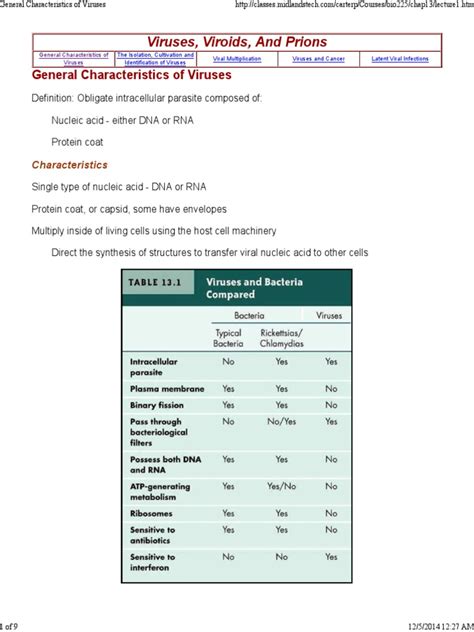 Viruses: Meaning, Nature and Structure - Biology Discussion Viruses are a unique group of infectious agent whose uniqueness resides in their simple, acellular organisation and pattern of reproduction. Viruses differs from the living cells in three ways: Their simple, acellular organisation. The presence of either DNA or RNA, but not both (like human cells).CK12-Foundation Learn about the characteristics of viruses, their structure, how they replicate, and how they infect different hosts. Explore the different types of viruses, their examples, and their evolution with life.11.1: Viruses - General Characteristics - Biology LibreTexts Learn about the properties, hosts, and life cycles of viruses, the smallest infectious agents. Find out how viruses were discovered, how they reproduce, and how they cause diseases.
 What are the non living characteristics of viruses
The study of viruses is known as virology and people who study viruses are known as virologists. Viruses infect and live inside the cells of living organisms. When viruses infect the cells of their host, they may cause disease. For example, viruses cause AIDS (Acquired immune deficiency syndrome), influenza (flu), chicken pox, and the common cold.